By: Cheryl Michelet, American Sugar Cane League
One topic seemed to be on everyone’s mind as Louisiana’s sugarcane field day season got underway this summer: the pasture mealybug.
The invasive insect, first identified in a handful of Louisiana sugarcane last year by crop consultants, has quickly become one of the industry’s top research priorities. At each of the eight field days held across the sugarcane belt, growers eagerly listened as LSU AgCenter and USDA Agricultural Research Service scientists shared the latest findings on the pest’s biology, monitoring efforts and ongoing management trials. While researchers continue searching for long-term solutions, growers left with a better understanding of the herculean effort being made by researchers, agronomists, consultants and their counterparts in other states and countries as the entire industry pulls together to fight this new challenge.
But the field days offered much more than an update on a single insect.
Hosted by the LSU AgCenter with support from the American Sugar Cane League and other sponsors, the meetings gave growers an opportunity to see firsthand how research is helping address the challenges facing Louisiana’s sugarcane industry, from developing new varieties to improving production practices and protecting crop health.
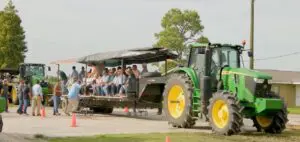
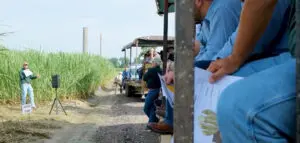
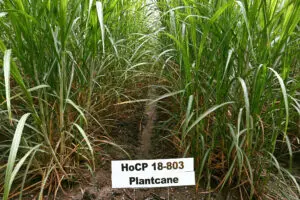
For the first time, outdoor demonstrations were offered in Alexandria and Dr. Braden Blanchard led attendees through research plots filled with potential new sugarcane varieties. As growers walked among the experimental cane, he explained how DNA technology is being incorporated into the breeding program to help identify promising varieties earlier in the selection process. While years of field testing will always be required before a new variety reaches farmers’ fields, researchers hope the technology will help accelerate the development of stronger, more resilient sugarcane.
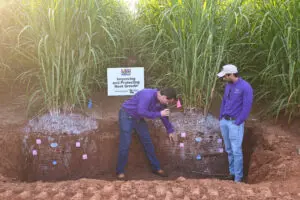
Just a short distance away, another interactive demonstration gave growers a rare opportunity to see what is happening beneath the soil. Dr. Andrea Gama and Dr. Saulo Castro exposed an extensive sugarcane root system along the edge of a field, allowing attendees to better understand research focused on improving root health and resilience.
Their work is evaluating whether specific nutrients can strengthen root development and help sugarcane better withstand stresses such as freezes, diseases and the demands placed on plants during production practices like early-cut seed cane. Researchers are also studying which nutrients provide the greatest benefit, when they should be applied and at what rates. The visual demonstration gave growers a fascinating look at a part of the crop they spend their careers managing but rarely have the opportunity to see.
Field day participants also received updates on annual variety recommendations, sugarcane pathology research, weed management trials, drone technology and a new fertilizer application method being evaluated to improve nutrient efficiency.
The research highlighted throughout field day season represents the work of scientists across Louisiana, but it also reflects something much larger. This year marks the 100th anniversary of the cooperative agreement between the American Sugar Cane League, LSU AgCenter and USDA Agricultural Research Service. For a century, that partnership has advanced research that helps Louisiana’s sugarcane growers improve productivity, overcome new challenges and remain competitive.
For those unable to attend or anyone who would like to revisit a presentation, several of this year’s research updates are available on the American Sugar Cane League’s website. They offer a reminder that while field days may last only a few hours, the research behind them continues year-round, helping ensure a strong future for Louisiana’s sugarcane industry.