Sugarcane field days have long been a summer tradition across Louisiana’s cane belt, providing growers an opportunity to see research firsthand and hear directly from scientists, extension specialists and fellow farmers.
Six years ago, leaders in Pointe Coupee Parish decided it was time to bring that opportunity closer to home.
Although Pointe Coupee had become Louisiana’s largest sugarcane-producing parish, local growers still had to travel to field days held in other regions of the cane belt. As sugarcane acreage expanded and new producers entered the industry, a committee of local leaders saw the need for a field day in the parish.
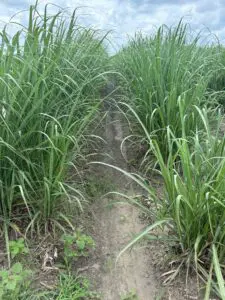
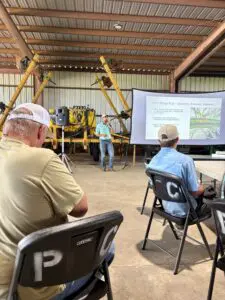
“We’re the largest sugarcane-producing parish, and at the same time we didn’t have anything for sugarcane farmers to get together and learn about research,” said Gert Hawkins, who serves on the planning committee. “We had new growers coming into the industry, so we came up with the idea of a variety field day where people could learn about the different sugarcane varieties.”
The annual event is hosted at the farm shop of Joby Beaud, whose farm includes research plots conducted in partnership with the LSU AgCenter, USDA and the American Sugar Cane League. Beaud, Hawkins and Pointe Coupee Parish Extension Agent Mark Carriere organize the field day each year.
While the event offers the latest research updates, Hawkins said one of its most important goals is emphasizing the importance of planting multiple varieties.
Unlike annual crops that are replanted each year, sugarcane varieties often remain in production for multiple crop cycles. That makes variety selection one of the most important decisions a grower can make.
Hawkins recalls when LCP 85-384 dominated Louisiana acreage before rust significantly reduced its performance.
“It was planted on almost 90 percent of the acreage in some areas, and rust took it out,” she said. “We learned from that experience.”
Today’s growers are encouraged to plant multiple varieties with different characteristics, including disease resistance, yield potential and freeze tolerance. Field days provide an opportunity to see those differences firsthand and begin thinking about planting decisions for the coming season.
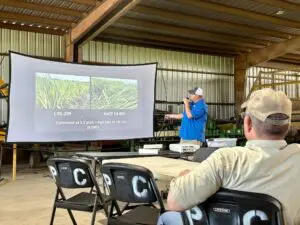
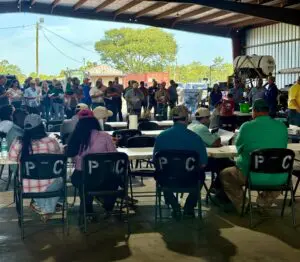
Just as important are the conversations that happen before and after the presentations.
“We’re all one big family in agriculture,” Hawkins said. “You’ll hear a presenter talk about something, and then you’ll talk with a neighbor and find out they saw the same thing in their field.”
Those discussions often help identify emerging issues and connect growers with researchers and extension personnel who can help find answers. According to Hawkins, that collaboration remains one of the greatest strengths of Louisiana agriculture.
This year’s Pointe Coupee field day was originally planned to include tours of the research plots, but wet field conditions moved the entire program indoors. Even so, the focus remained the same: sharing information and learning from one another.
Additional field days will be held across Louisiana’s cane belt throughout the summer. Growers can find a complete schedule at lasugar.org.
Looking back on the event’s beginnings during the COVID-19 pandemic, Hawkins sees a fitting comparison between the field day and the crop it serves.
“It planted a seed,” she said. “And it has grown from there.”
Six years later, that seed continues to bear fruit through better-informed decisions, stronger farms and an industry committed to learning together.