
By: Wilson Judice, Senior Agronomist, American Sugar Cane League
The Farm Machinery Committee of The American Sugar Cane League met on May 6, 2026. Four main topics were presented and discussed by the committee.
Jason Buss – John Deere
The first presentation was by Jason Buss, with John Deere. Jason presented the results of research conducted by John Deere with the help of the American Sugar Cane League and the LSU Ag Center.
The first part of this research focused on the relationship between ground speed, primary extractor fan speed, and how they affect harvest losses. The main take away is that ground speed and fan speed matter. While we also realize the need to maintain harvest efficiency, there can be sugar/acre losses caused by trying to harvest at too high of a ground speed. Jason made a good point in that there is a difference in rushing when trucks are piling up and waiting on cane and when the harvester and tractors are waiting on trucks to load. You can gain a few extra pounds of sugar/acre by slowing down the ground speed. Slowing ground speed can increase per acre yield while still maintaining adequate stalk cleaning. Clean cane is vital for the mills to run efficiently and improves a grower’s profitability. None of this research encourages sacrificing clean cane to increase yield or efficiency.
It should go without saying that running extractor fans at higher than recommended speeds can also result in losses. I won’t get into the exact details of the relationship between fan speed, ground speed, and the potential for losses in this article as there will be a more extensive report on this research after a second year of data collection. A second year of data will make the results of this study even stronger.
The second part of this project is how base cutter blade condition and base cutter height affect losses at the front end of the combine. They compared a brand-new set of blades to a very worn set. They looked at how blade condition combined with varying base cutter heights affected harvest losses by leaving cane uncut. Both variables can influence harvester loss. Proper maintenance, including blade rotation and replacement is essential to prevent losses. Base cutter height can greatly affect cane losses especially when harvesting lodged cane. Base cutter height should be closely monitored. Research will also look at how these factors affect ratooning of subsequent crops. I feel certain that using worn out blades on a harvester will have a negative effect on the ratoon crop but, we won’t know the full extent of the impact until yield data is collected next year.
Harvey Blanchard – Blanchard Brothers Inc.
The second topic presented also focused on harvester losses. Several growers have noticed that when harvesting down cane that if the cane is leaning on the harvester the cane can fall behind the crop divider in front of the tracks. Once it gets pushed down into the ground the harvester has no chance of picking up that cane. Another potential point of loss is what I call “ladder loss”. There are several places along the side of the harvester where cane leaning against the harvester can be broken or pulled up. One of these is the ladder that the operator uses to climb up to the cab.
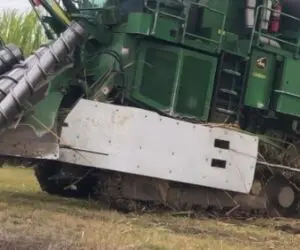
To avoid this “ladder loss” growers have adopted a shield system that bolts onto the side of the combine and covers the places that tend to grab cane and break or pull it. Mr. Havey Blanchard reported on his adaptation of this shield. Mr. Harvey asked me to point out that this is not his original idea but, that he learned about the shield from a neighbor. The shield is constructed from a large sheet of Teflon normally used in dump truck beds. The sheet is bolted onto brackets fabricated onto the harvester. They must be removable to allow access to the harvester for maintenance and repairs. Mr. Harvey has plans to extend the shields further back to prevent “ladder loss”.
Dr. Randy Price – LSU Ag Center
The third topic was presented by Dr. Randy Price with the LSU Ag Center. Dr. Price presented the results of his research and efforts to help arial applicators calibrate their sprayers and ensure that they maintain proper swath width.
This topic has become increasingly important because many growers are now using drones to apply pesticides and ripener products. Proper swath width and nozzle selection are very important to ensure proper application.
If you do have your own drone, I encourage you to reach out to Dr. Price and get his help setting it up for your operation. Another option is to attend one of the LSU Ag Center’s spray drone calibration workshops. We will be sure to advertise when the next one is scheduled.
Mission Statement
The final topic was the adoption of the Farm Machinery Committee Mission statement. The committee voted to adopt the mission statement as follows:
“The mission of the American Sugar Cane League Farm Machinery Committee is to research and innovate sugarcane mechanization. We bring together growers, engineers, and industry partners to address on-farm challenges, improve machinery design, and advance technologies that shape the future of sugarcane production. Through collaboration and practical problem-solving, we support a stronger, more efficient, and more vibrant industry.”
Practical Modifications to Improve Mechanical Whole Stalk Planters
While it was not an item on this year’s Farm Machinery Committee agenda, mechanical planters are often on the agenda. Last year we had presentations from two of our mechanical planter manufacturers on the latest generation of their billet planters. We have several planter manufacturers in the industry that have great designs for both whole stalk and billet planters. We also have several growers who have made their own modifications.
I recently visited with Jim and Errol Domingues, who have spent a great deal of time modifying their planters. They have come up with some practical modifications that can really improve the efficiency of mechanical planting.
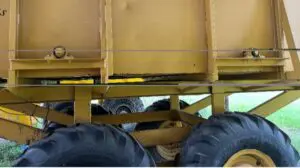
The first modification I noticed is that their planters are higher. Now I’m not very tall, but I can almost walk under their planters. The planter floor sits six feet from the ground. Raising the entire planter gives the cane (whole stalk) a better chance to feed into the chute. Raising the planter also allows you to decrease the angle of the chute. The idea is to keep the sides as straight as possible to help the cane flow into the planting furrow.
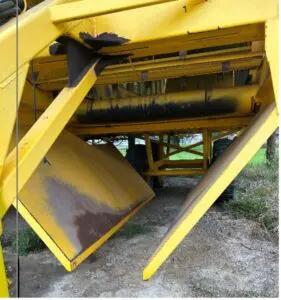
An additional modification to the chute is that they have extended it back towards the wheels of the planter. This modification prevents cane from falling in front of the wheel and being run over.
Second is their redesigned belt floor. I know some people are not fans of a belted floor, but the Domingues’ design incorporates rollers to prevent the belt from dragging and stretching. With the addition of rollers, they were able to greatly reduce the amount of hydraulic pressure required to move a load of seed cane along in the planters. The first generation of this planter had a roller between each frame member. The second generation eliminated every other roller and replaced it with a flat plate. Jim noted the importance of welding these plates thoroughly both in the front and back. The belt is pulled by chains that are attached to the belt using a spreader bar so that they are not pulling on one spot of the belt, but all along it.
The final planter modification is the addition of thin teeth on the drum of the planter. The original teeth are replaced with ones that have holes drilled into them that allow the thinner teeth to be mounted onto them. The thinner teeth are mounted ¼ of an inch further out than the original teeth allowing them to grip the stalks of cane better and prevent damage from a tooth slipping on the cane. The thin tooth is fabricated from 1/8” steel plate. The best way this was explained to me is it’s much easier to grab and pull a stalk of cane with the edge of a cane knife than with a piece of 3/8” flat bar.
I hope these modifications can help you improve your whole stalk planter operation or at least give you some ideas to inspire you. There are innovative people in our industry. Sharing our ideas can really benefit the entire industry. If you have any questions, suggestions, or if I can be of any help to you. Please reach out, I’m only a phone call or text away.
Wilson E. Judice, (337) 578-2465, wjudice@amscl.org